

the dye process


The alchemy of natural dyes is a lesson in chemistry, patience and creativity. The formula for coaxing vibrant, lasting colors from plants and insects is a combination of minerals, proteins, and particular compounds for each plant.


some of the natural dyes i use
redwood
hollyhock
sunflower
cochineal
marigold
cosmos
onion
madder
chestnut
walnut
indigo
cutch
avocado
weld
lac

the process
Each dye plant can produce an array of hues, depending on the minerals used to bond it to the fiber, the pH of the water in the dye bath, or in some cases, the temperature or duration of the dye bath. The process differs when dyeing protein fibers, such as wool or silk, versus cellulose fibers, such as linen, cotton, or hemp.
In general, most dye processes take up to two days. Each step takes a few hours to warm to the correct temperature and simmer for at least an hour. The rags then remain in the dye pot for 12-24 hours and after a cold water rinse, cure for two weeks in a dark room before being ready for their final wash.


sourcing
Sourcing the highest quality materials and dyes is very important to me.
Silk was first discovered in China around 3600 BC and remained a Chinese trade secret for thousands of years before spreading to other Asian regions. The most prolific silk is produced by a silkworm who relies solely on the mulberry tree for food. I work directly with a company in the historic silk road region of northern China to source my silk.
While I have been extremely happy with our relationship and the quality of silk from them, global supply chains are a bit complex and I wish I knew more about the specific production of my silks before they arrive in Montana. Someday I hope to journey to China and visit the mulberry groves for myself!
While some of my dyes are grown in my home garden, I cannot keep up the quantity needed to dye all of the wild rags I am making for you! Additionally, there are some dye plants that have no interest in growing in a Northern Rockies montane valley. These dyes I source from other producers and suppliers.
While I source from several places, many of my dyes come from a mother-daughter company in Canada. They have been instrumental in the renaissance of natural dyes in modern times and work directly with producers globally to source all of their dyes and materials. I feel confident in their commitment to fair trade and sustainability.
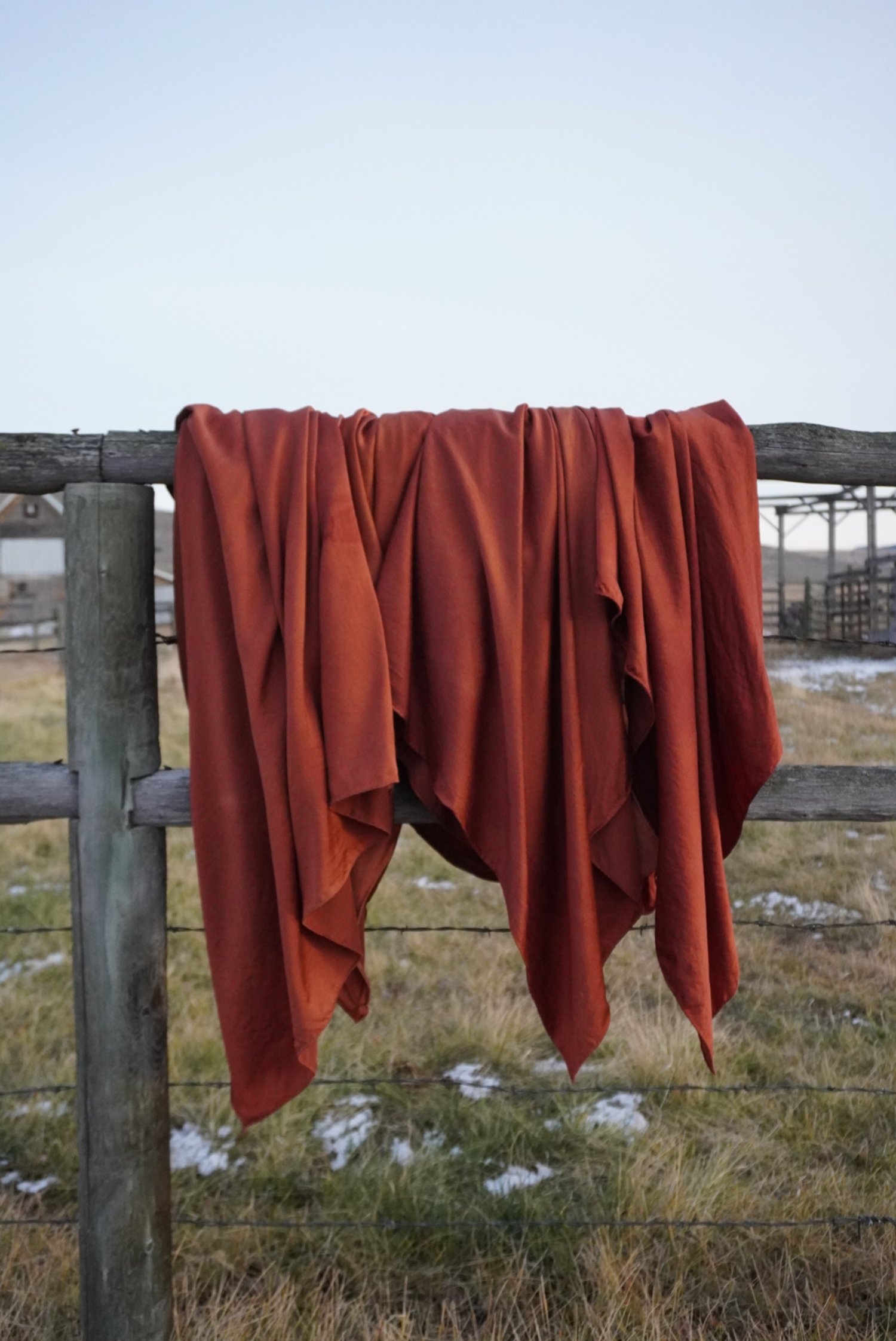


SHOP
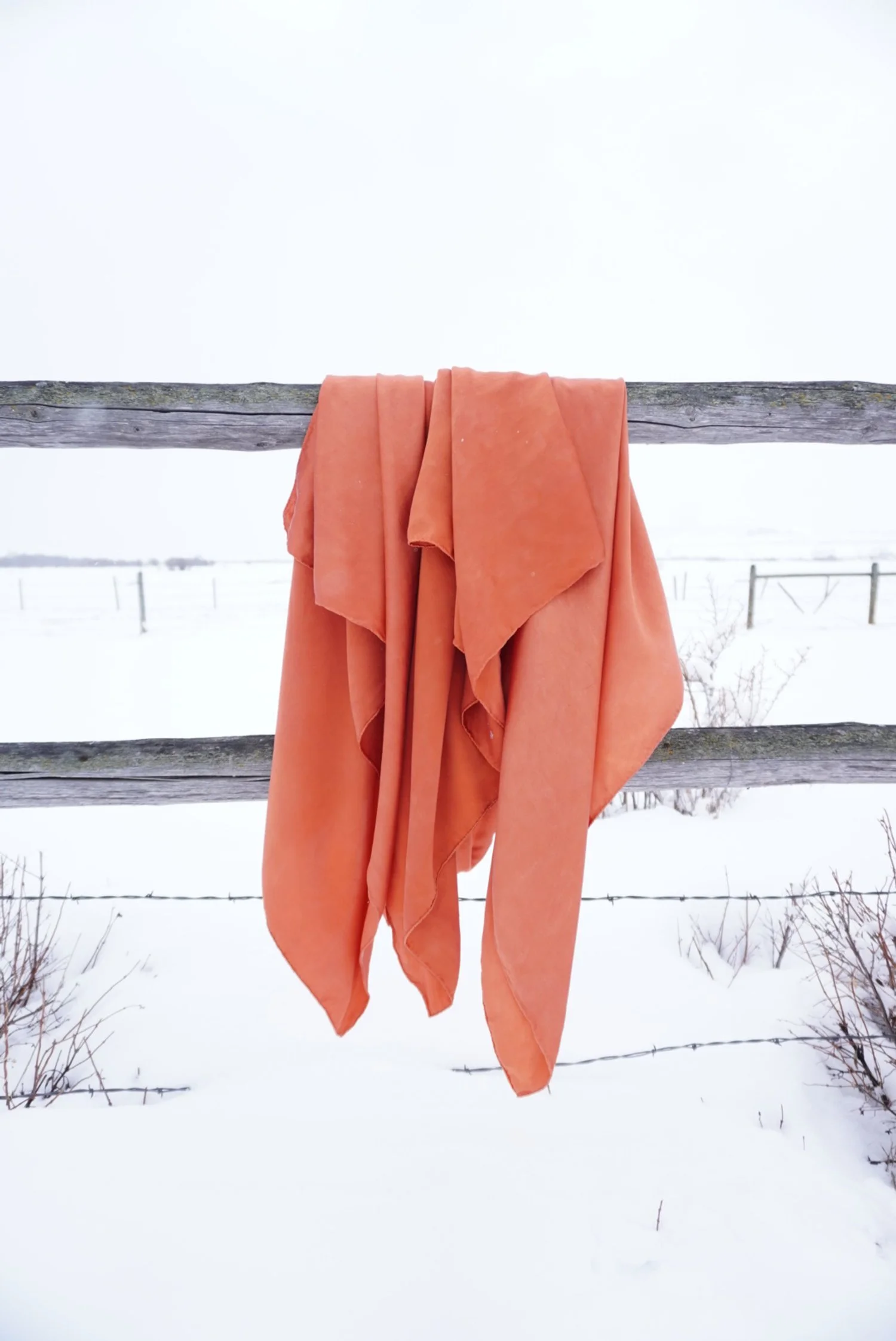
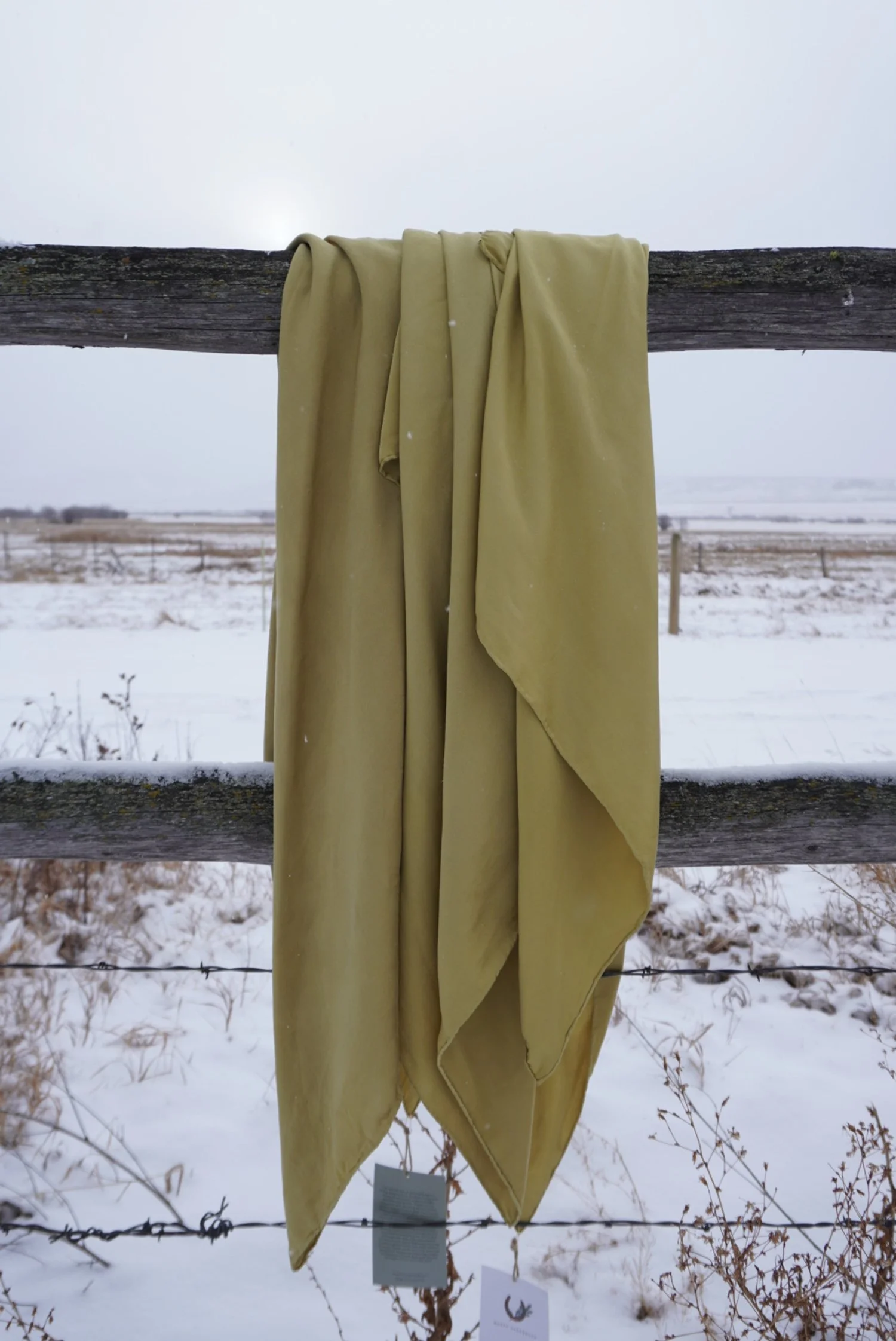
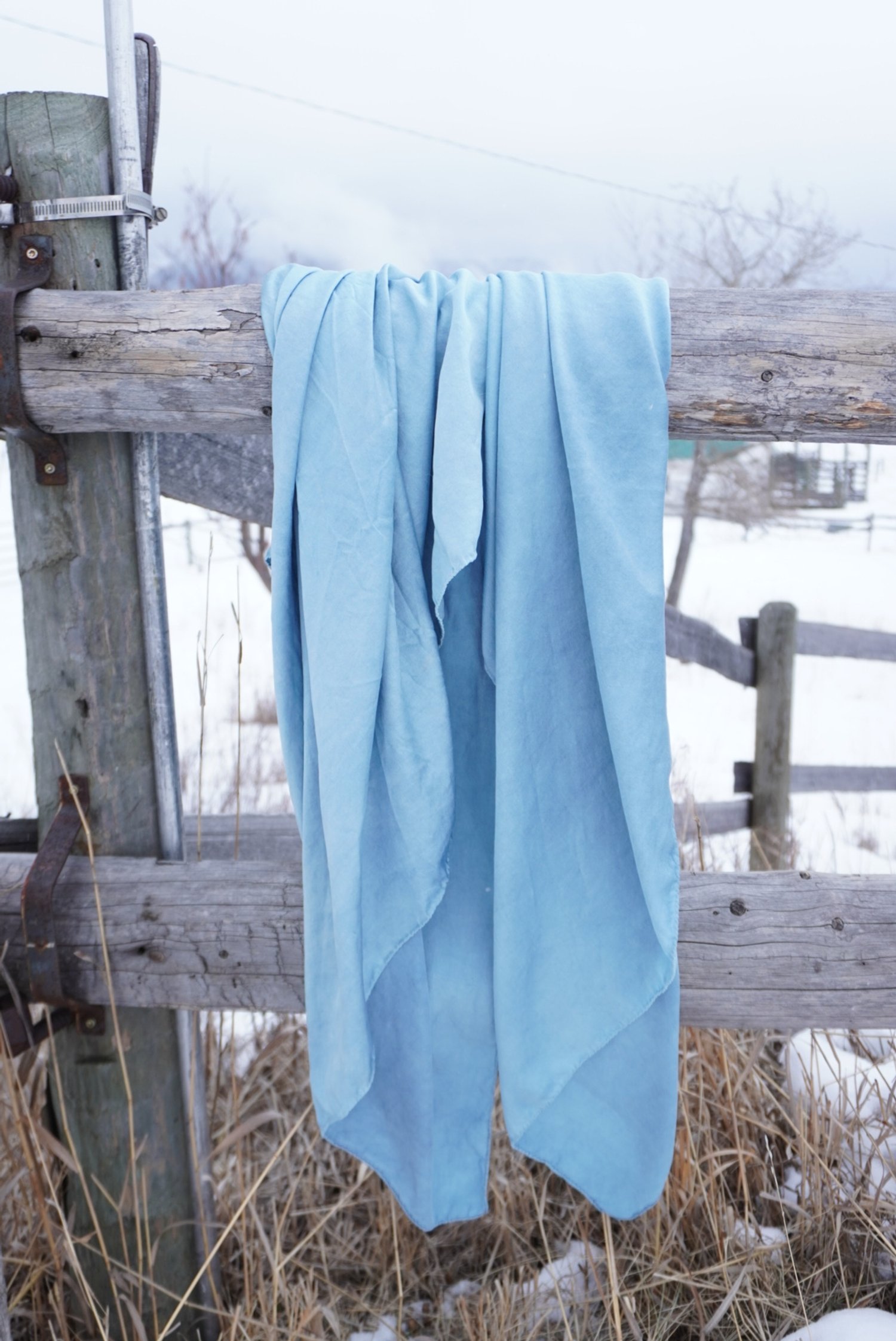
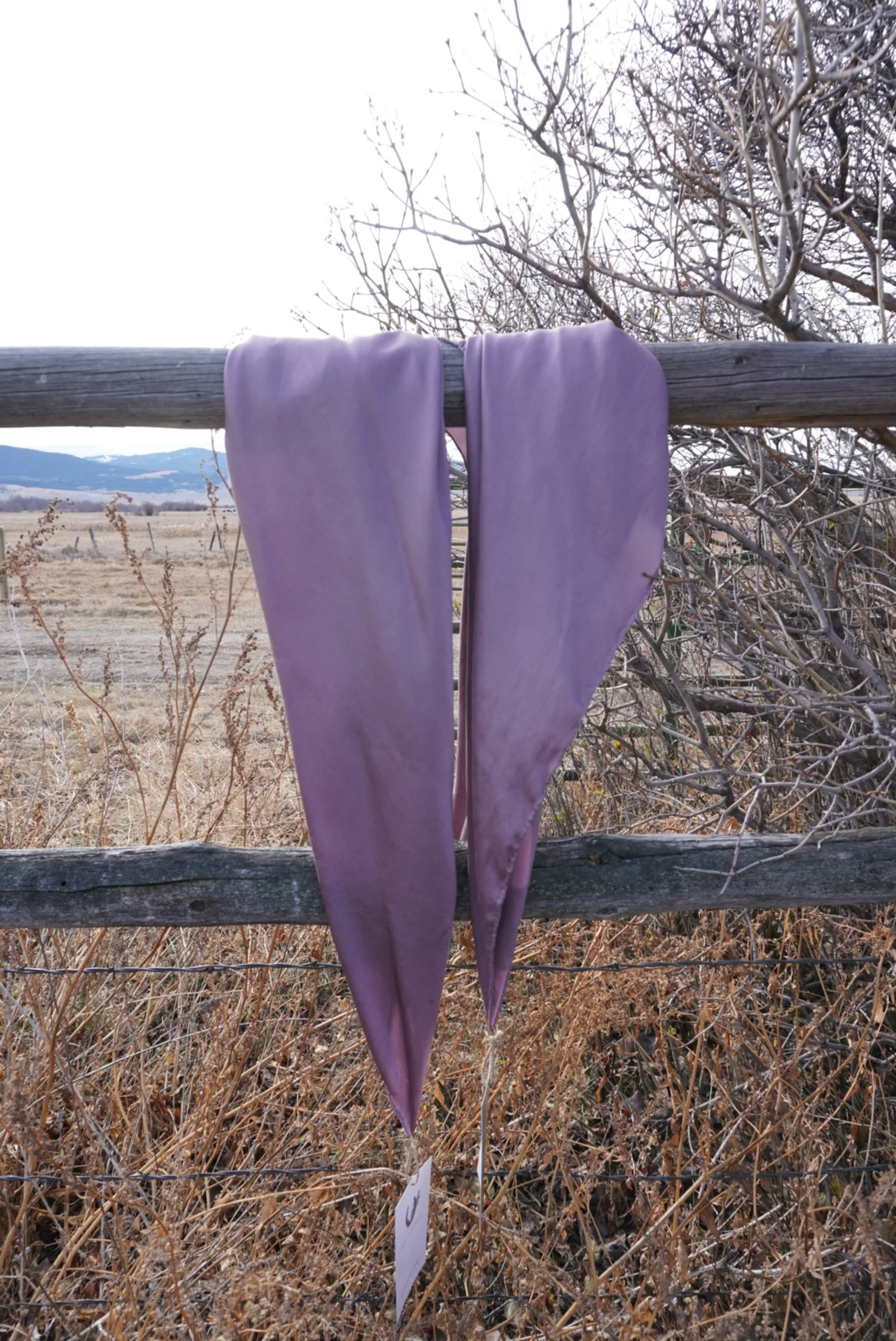
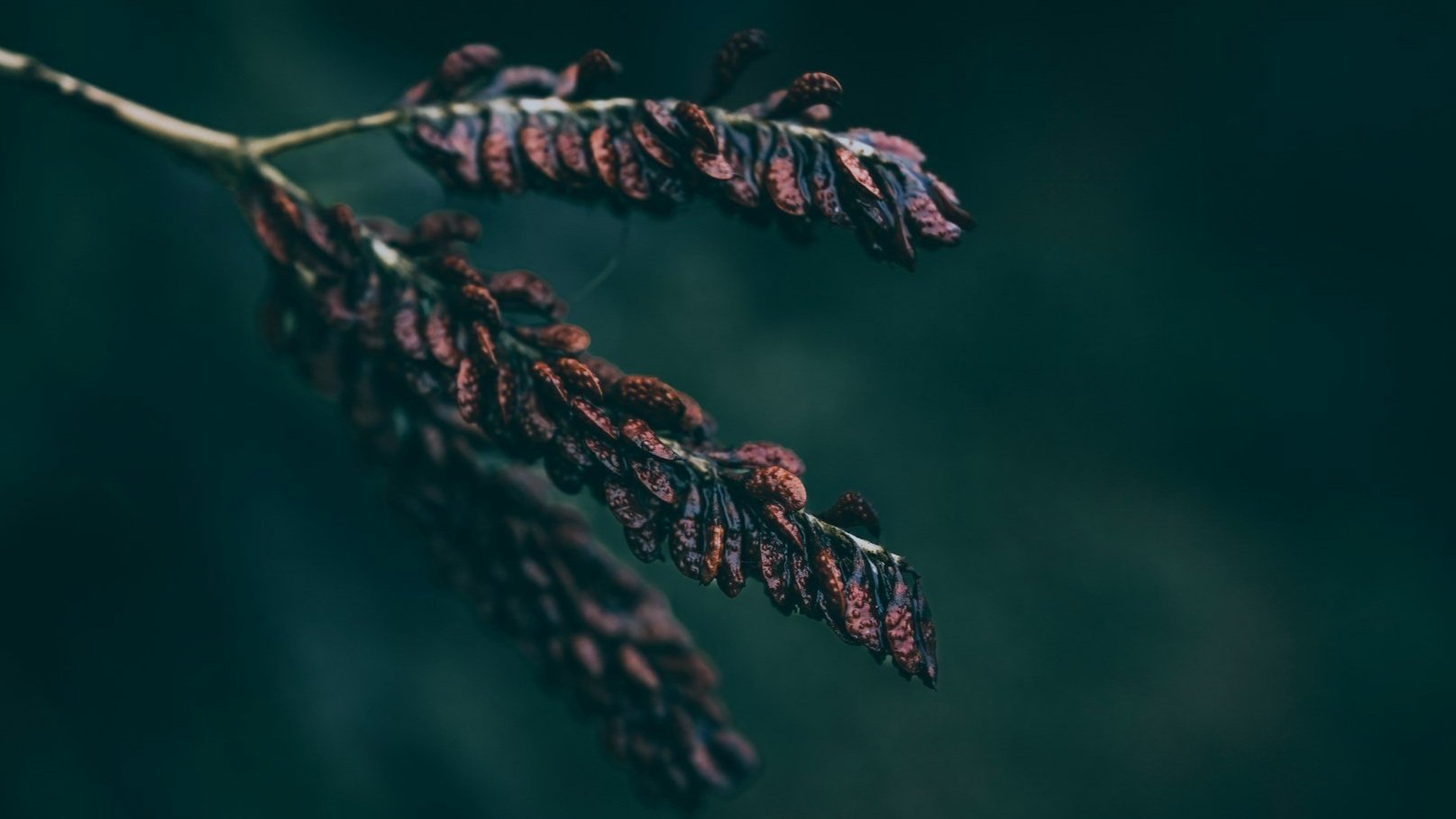
This bandana is dyed with indigo and is a lovely, neutral sky color.
All scarves are one of a kind and show slight variation. I do my best to accurately represent the colors of each rag, but I’ll be honest - it’s hard! Each scarf will have it’s own bits of character. While I always strive for consistency in color, sometimes its the movements across the scarf that make it unique and beautiful.
Natural dyes are living, dynamic hues. They are sensitive to prolonged sunlight and frequent washing. To enjoy the vibrancy of your colors for as long as possible, I recommend storing your wild rags out of direct sunlight and only washing when necessary. Best practice is to hand-wash with cool water and a pH neutral, liquid soap. These rags will evolve over time, just as we do. If you have any questions about wild rag care, please reach out.
Bandanas are 20”x20” and 12 mm silk charmeuse with a hand sewn hem.